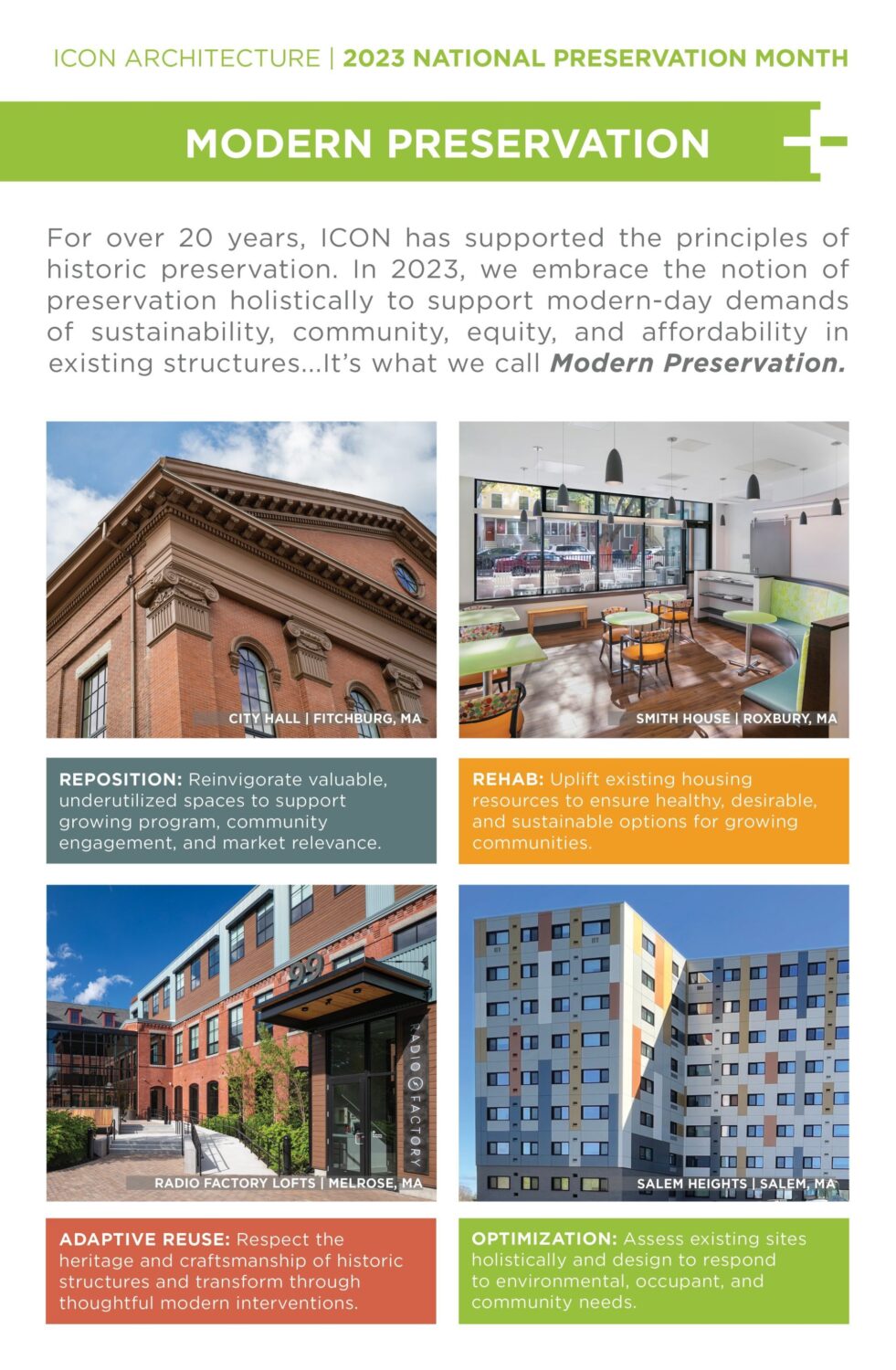
For more than 20 years, ICON Architecture has supported the principles of historic preservation. In 2023, we continue that commitment by embracing a broader, more holistic approach to preservation, one that responds to modern-day needs around sustainability, community, equity, and affordability within existing structures. This approach is what we call Modern Preservation.
Modern Preservation recognizes that historic buildings are not static artifacts. They are valuable, living assets that can be thoughtfully adapted to serve today’s communities while respecting their original character and craftsmanship. Through this lens, ICON approaches preservation as an opportunity to strengthen neighborhoods, extend the life of existing resources, and design spaces that remain relevant for generations to come.
Our work is grounded in four core strategies.
- Reposition focuses on reinvigorating valuable, underutilized spaces. By rethinking how these buildings function, we help support growing programs, foster community engagement, and ensure long-term market relevance. Projects like City Hall in Fitchburg, Massachusetts demonstrate how civic architecture can be renewed to better serve contemporary needs while preserving its historic presence.
- Rehab emphasizes uplifting existing housing resources to ensure they are healthy, desirable, and sustainable. Through careful renovation and modernization, we help create housing options that support growing communities without sacrificing character. This approach is exemplified by projects such as Smith House in Roxbury, Massachusetts, where preservation and livability work hand in hand.
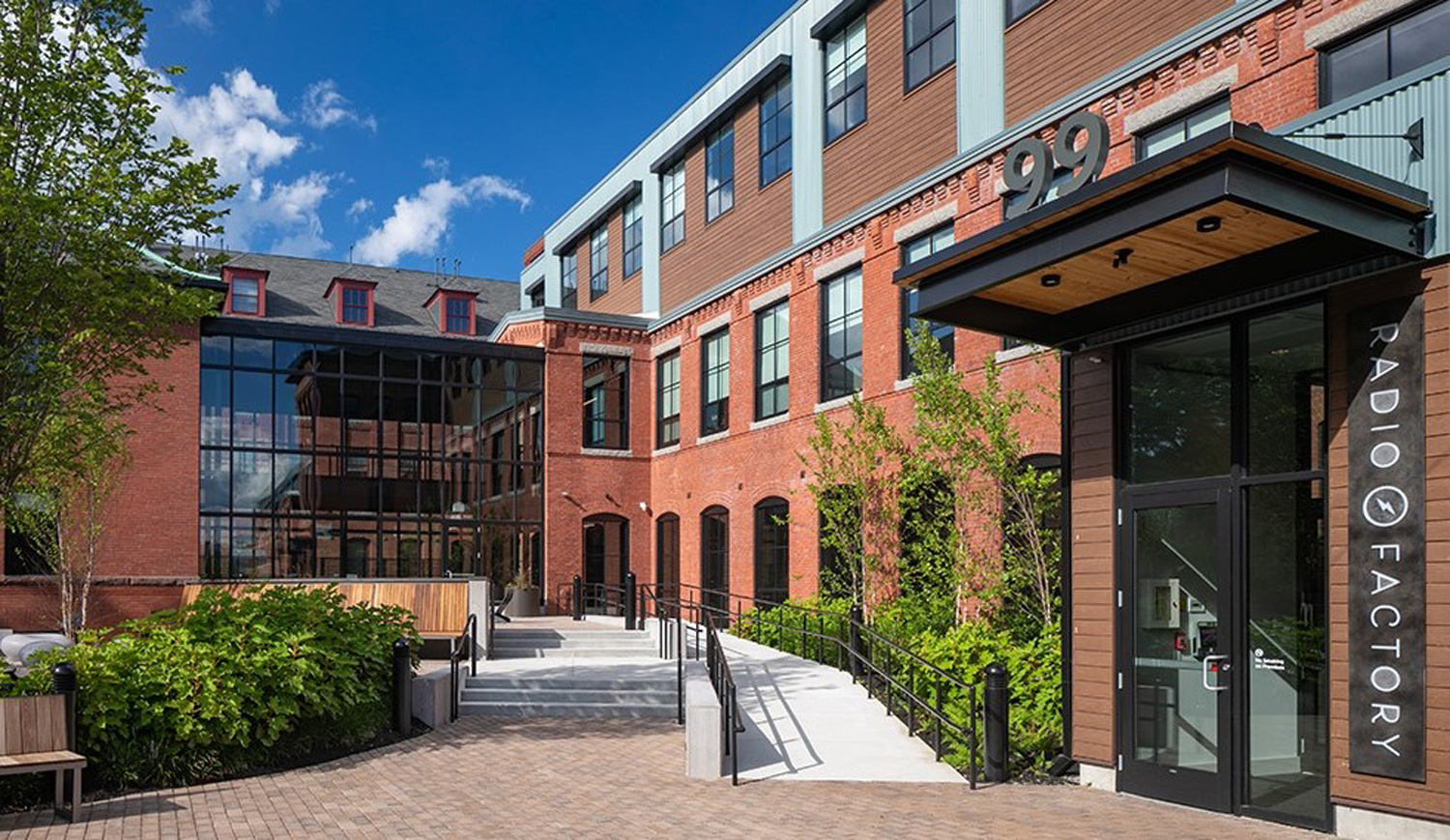
- Adaptive Reuse respects the heritage and craftsmanship of historic structures while transforming them through thoughtful modern interventions. By repurposing buildings for new uses, we honor their past while giving them a meaningful future. Radio Factory Lofts in Melrose, Massachusetts is one example of how adaptive reuse can successfully blend history with contemporary living.
- Optimization looks at existing sites holistically, assessing environmental conditions, occupant needs, and community impact. Through careful analysis and design, we ensure that each project responds not only to its physical context, but also to the people it serves. Developments like Salem Heights in Salem, Massachusetts reflect this integrated, forward-looking approach.
Together, these strategies define ICON’s vision for Modern Preservation. By balancing respect for the past with the realities of the present, we aim to create architecture that is sustainable, inclusive, and deeply connected to the communities it supports.