A powerful symbol of transformation, the Fitchburg Arts Community has become a cornerstone of the city’s cultural and economic revitalization.
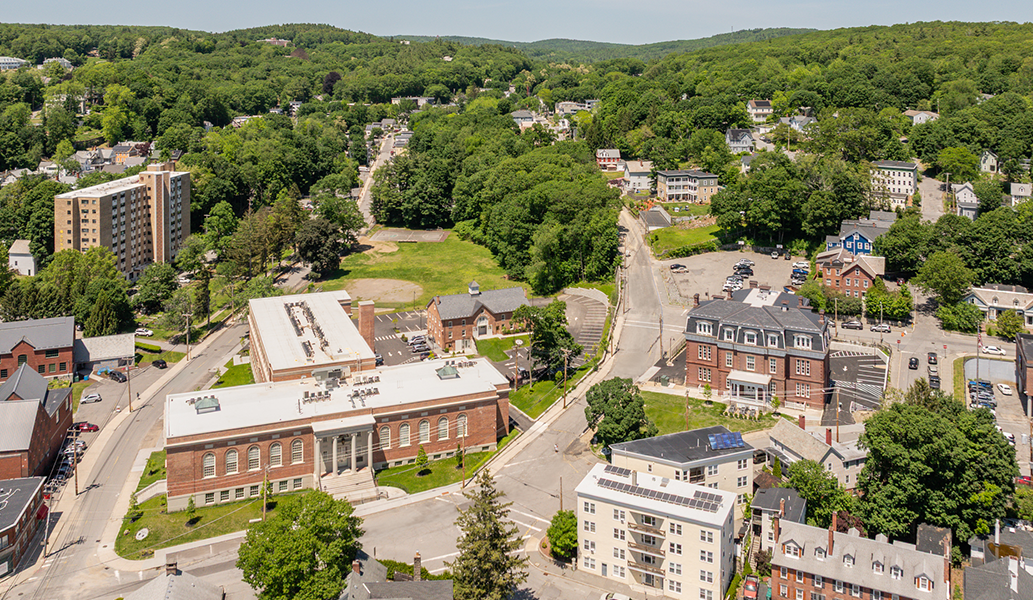
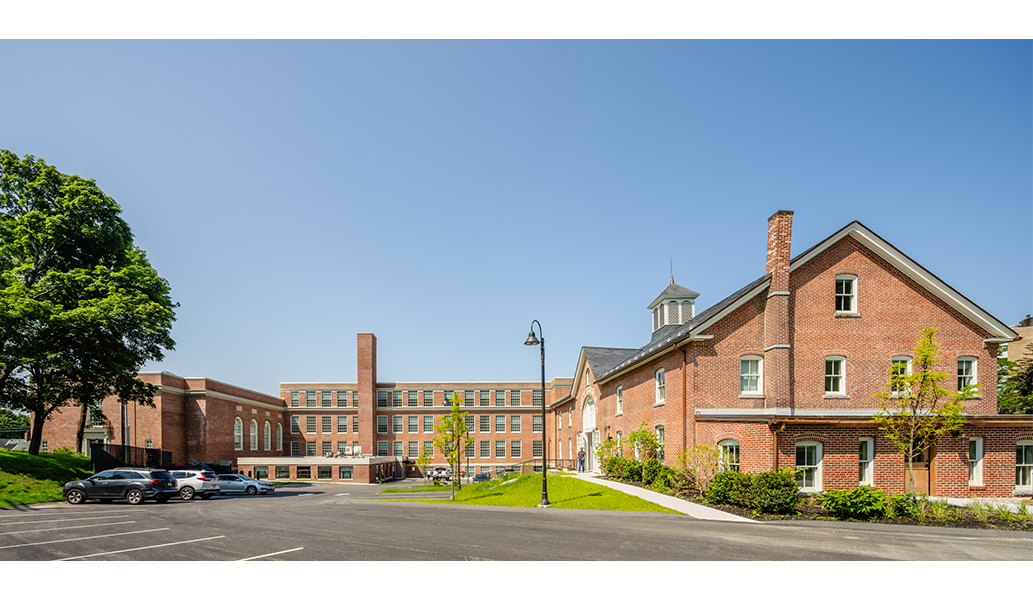
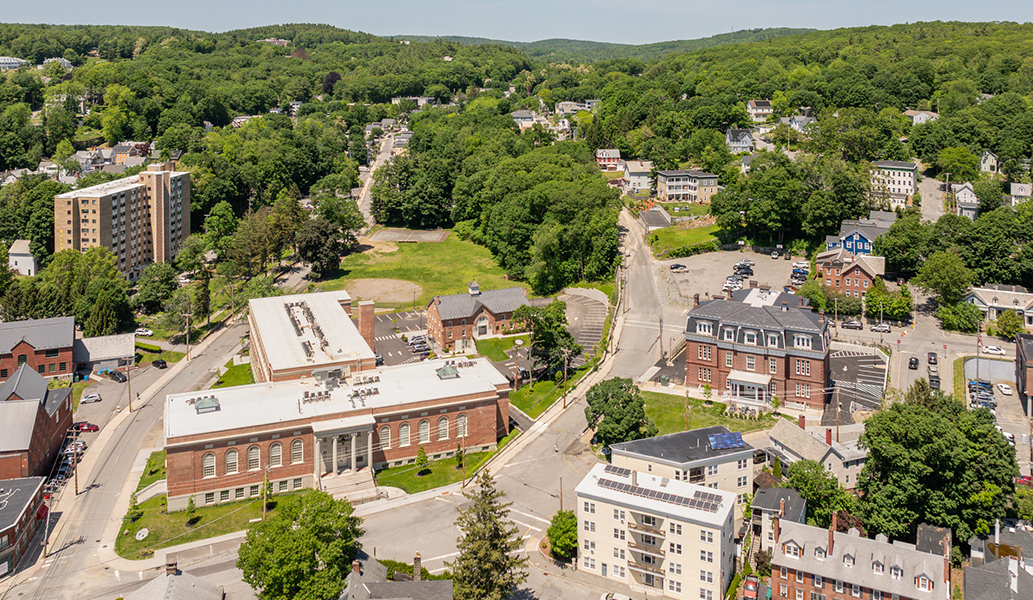
This notable campus—a key driver for the Academy Street Educational District and included in Fitchburg’s “North of Main” Overlay District—is located directly across from the Fitchburg Art Museum. It features three historic buildings: the 1869 Academy Street School, the 1889 City Stables, and the 1924 B.F. Brown Middle School. These structures, once neglected and abandoned, have been thoughtfully restored, creating 68 affordable and unique residences that celebrate history while providing space for artists to thrive.
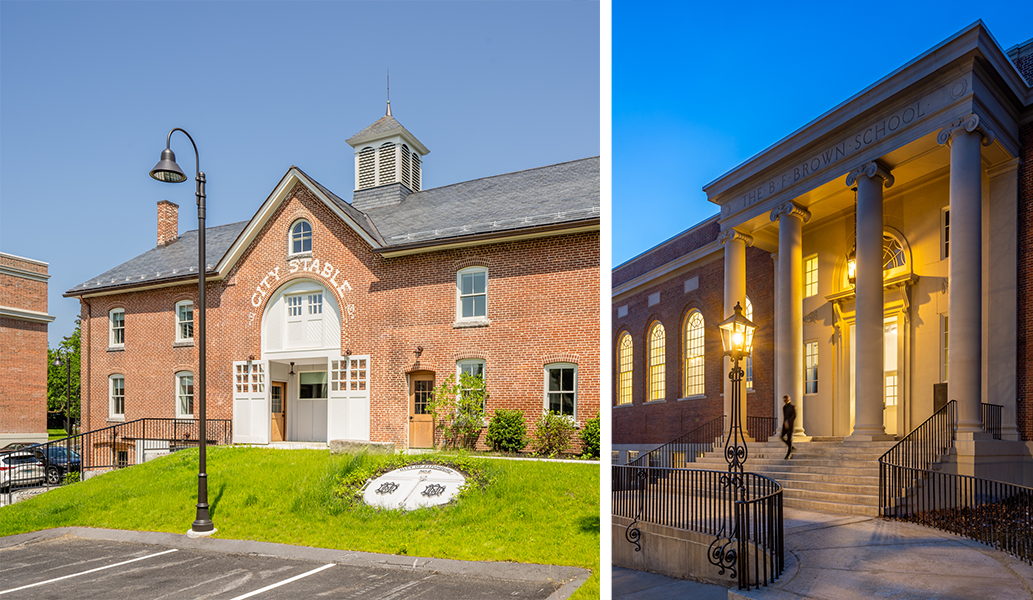
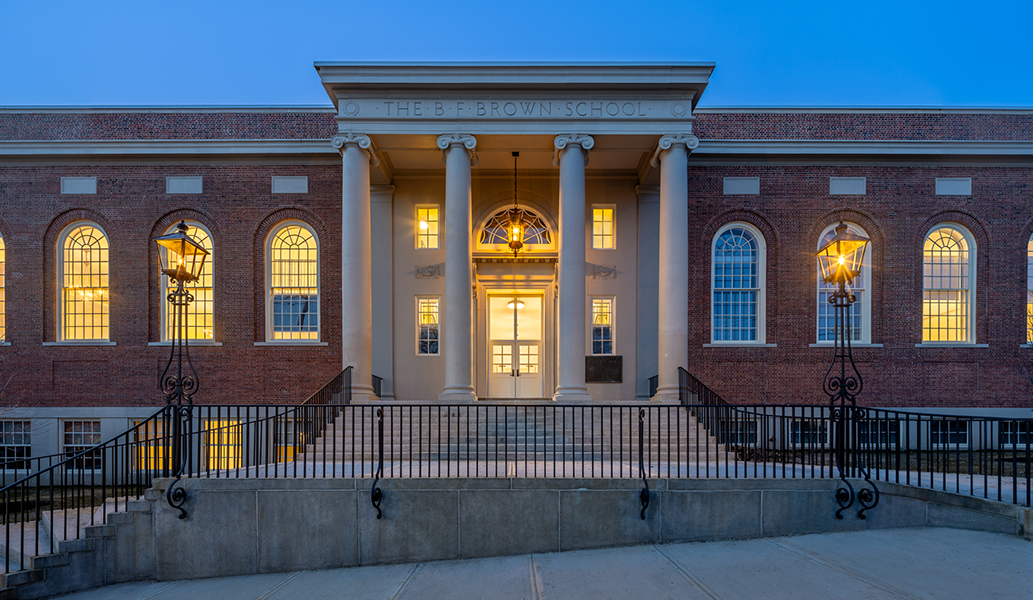
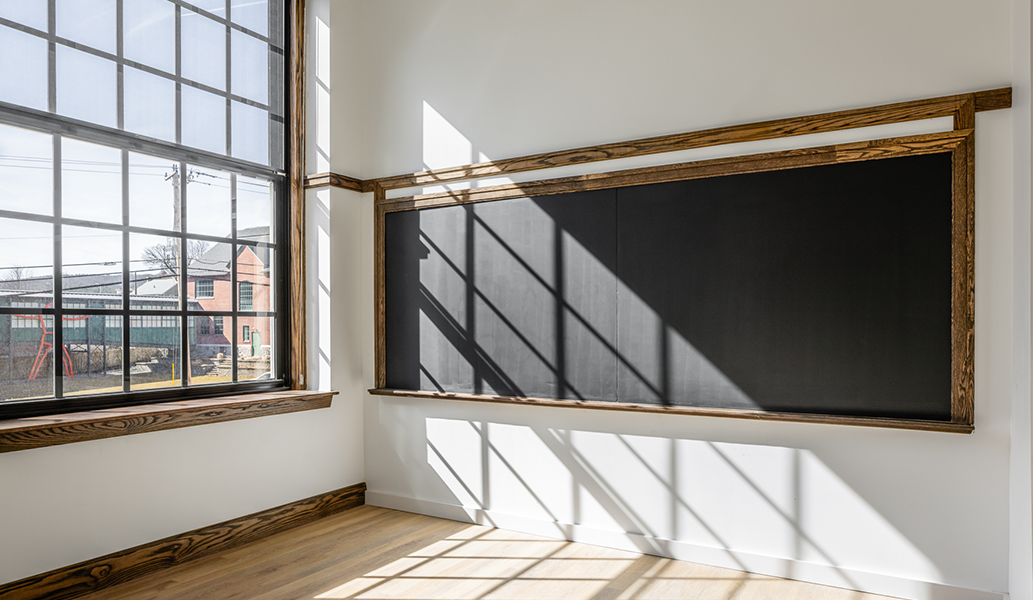
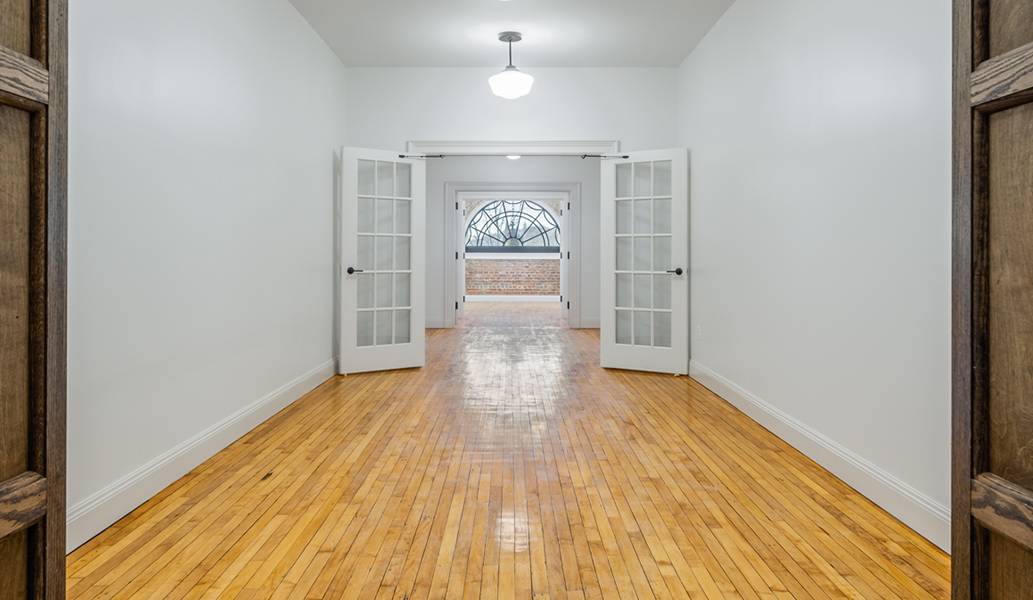
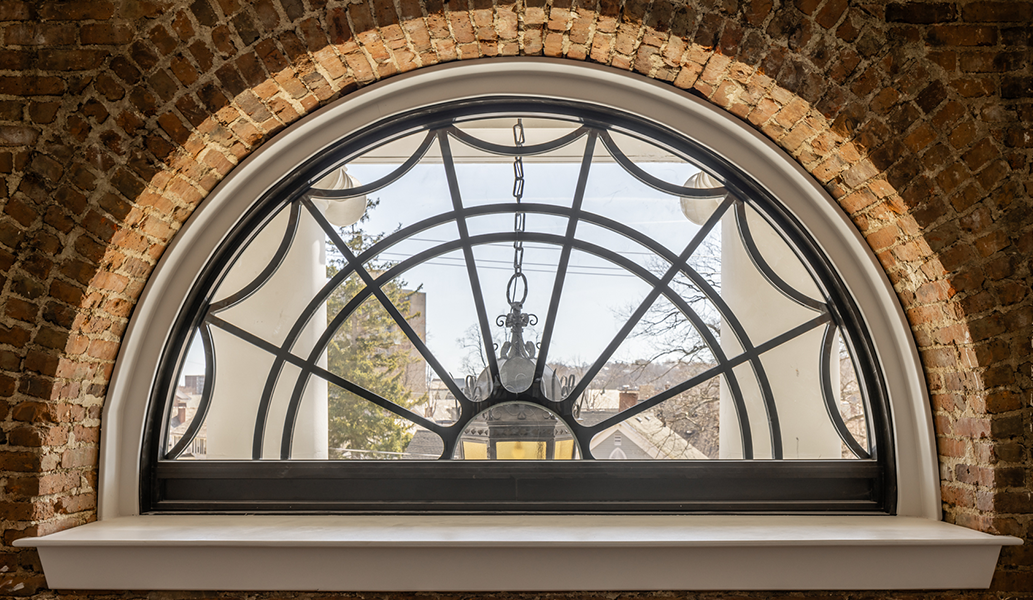
- The focal point of the campus is the F. Brown Middle School, which rose from the ashes of a devastating 2016 fire to become the largest residential component of the project. Apartments feature soaring twelve-foot ceilings, expansive classroom windows, and carefully restored details such as chalkboards, picture rails, wood trims, and floors. Shared art studios and amenity spaces foster collaboration, while playful wayfinding employs color accents to represent grade-school levels to honor the building’s educational past. The grand portico’s restored cast-iron railings and century-old bronze pendant light welcomes residents and visitors alike.
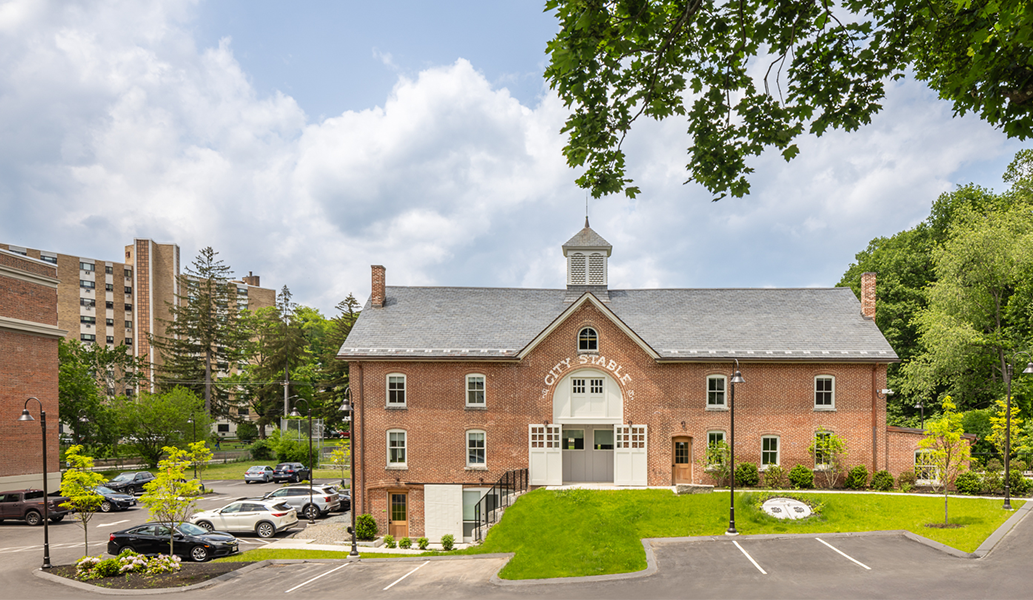
- The City Stables contains seven one-of-a-kind homes, blending single-floor layouts with multi-level townhomes. Exposed brick, timber beams, and mahogany entry doors preserve cozy utilitarian charm. Restored features such as carriage and hayloft doors, original hand-painted signage, the horse ramp, and the elegant scallop-louvered cupola — pay homage to the building’s working-class origins.
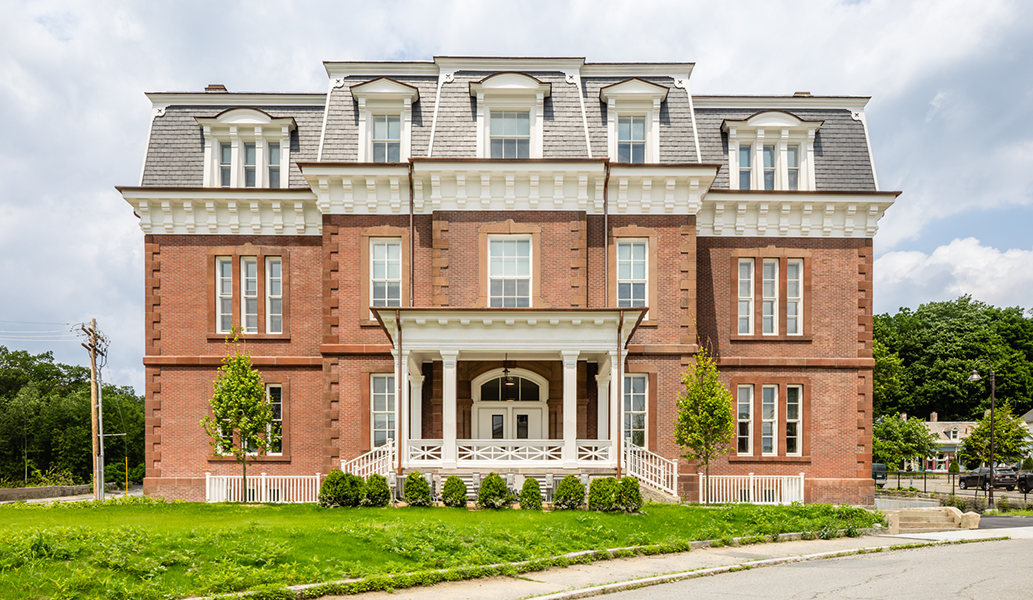
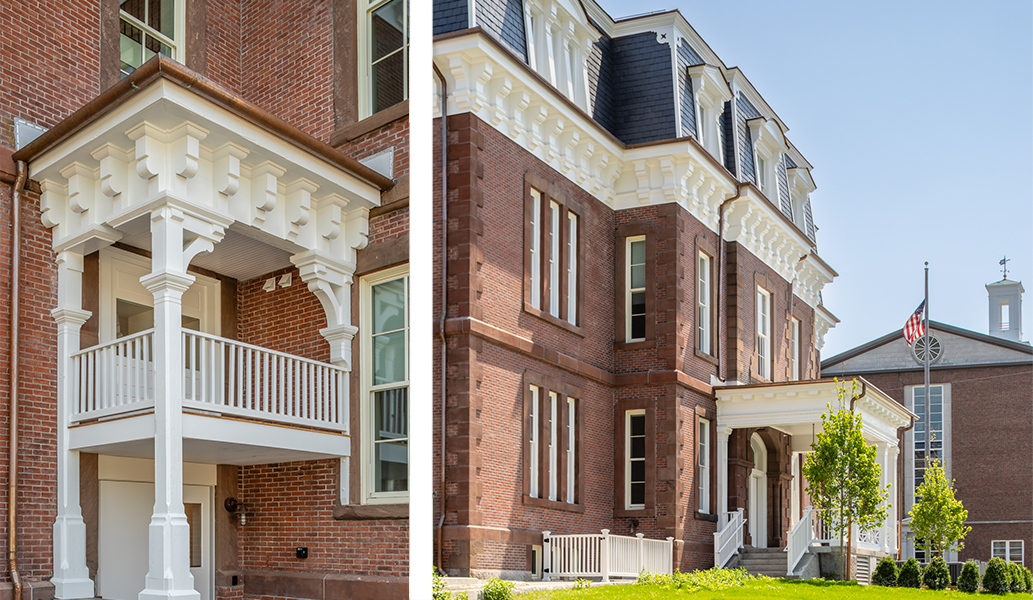
- The Annex offers twelve residences carved from original classrooms, each bathed in natural light through restored nine-foot windows. Ceilings soar over thirteen feet, many showcasing tin patterns. These dramatic yet welcoming spaces reflect the craftsmanship of the late nineteenth century, further highlighted by the building’s restored slate-and-copper mansard roof, dormers, and detailed wood trim.
Elements of the previous uses, such as old boiler doors, are integrated into the site as interpretive features. The cohesive campus demonstrates the value of historic preservation and adaptive reuse, maintaining each structure’s distinct architectural character while supporting contemporary residential needs.